Porcelain Pavilions
Toronto, Ontario
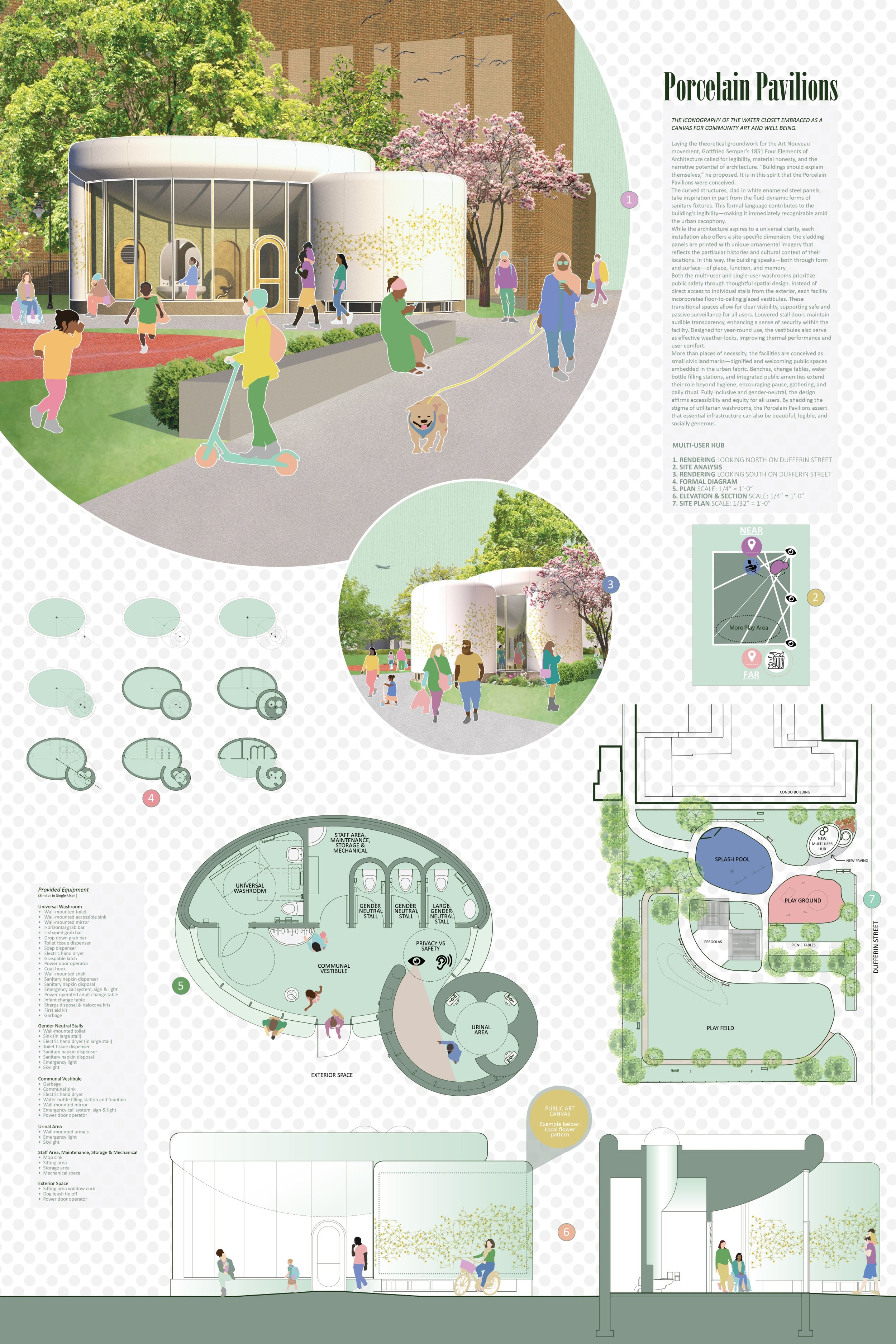
Laying the theoretical groundwork for the Art Nouveau movement, Gottfried Semper’s 1851 Four Elements of Architecture called for legibility, material honesty, and the narrative potential of architecture. “Buildings should explain themselves,” he proposed. It is in this spirit that the Porcelain Palaces were conceived.
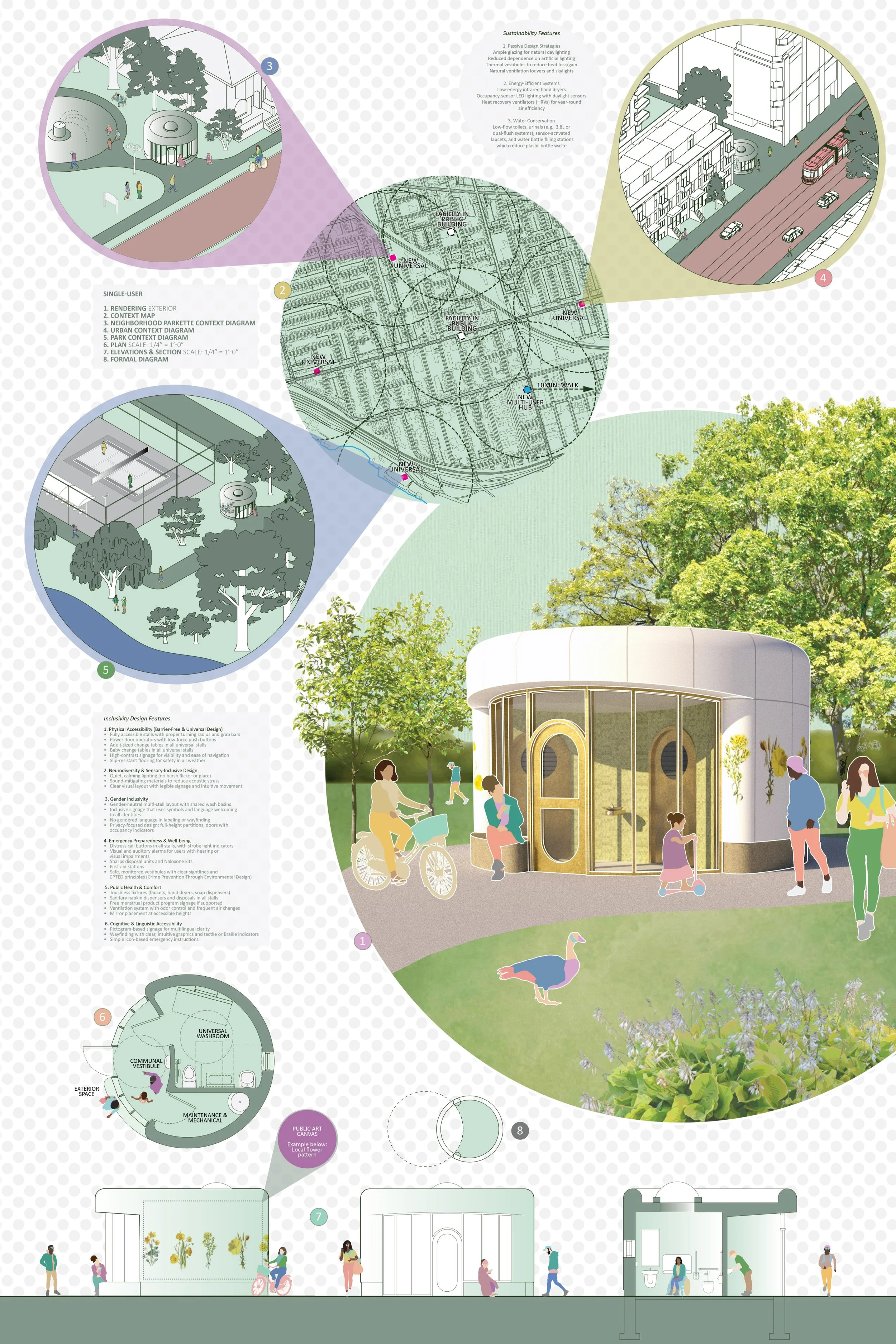
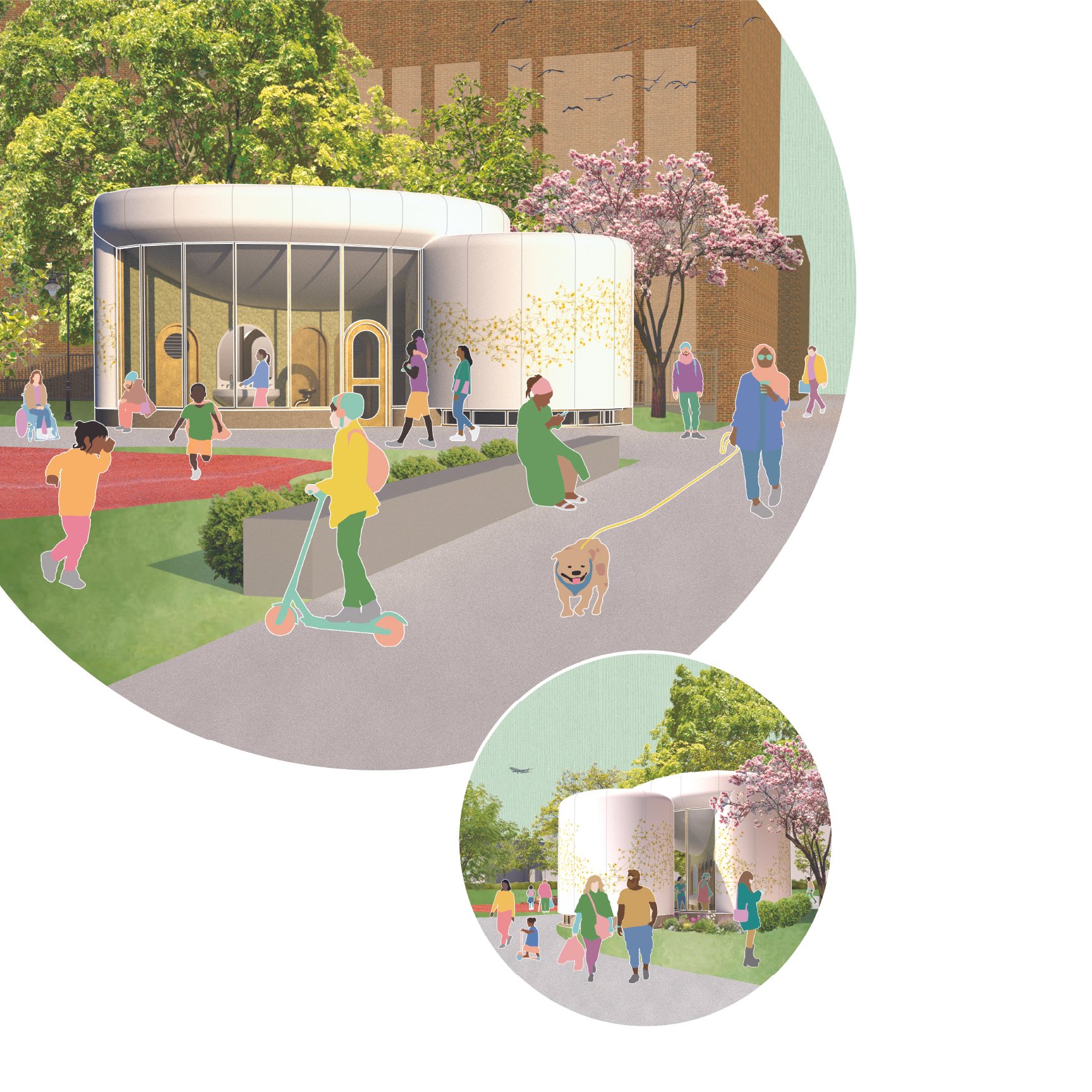
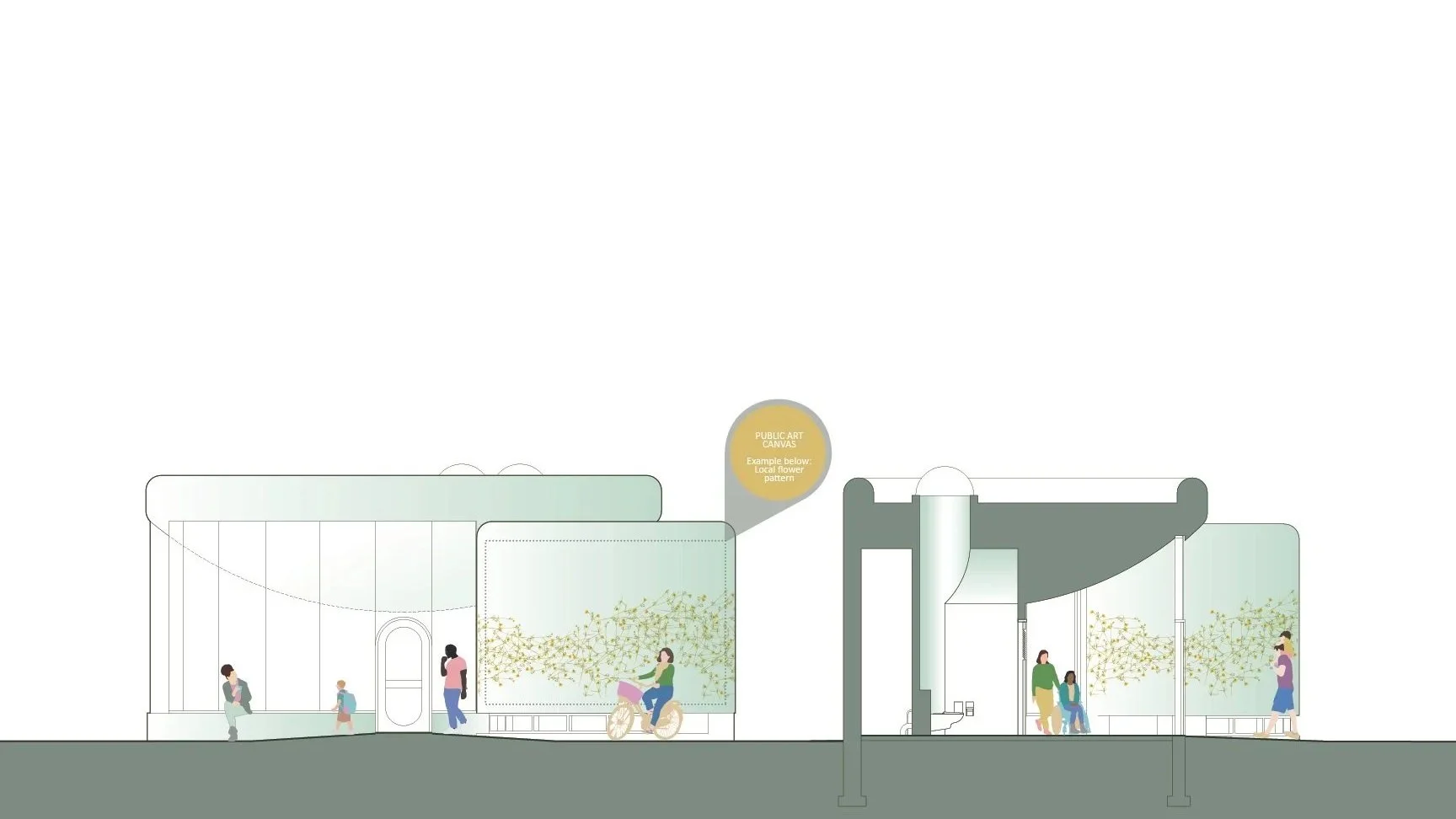
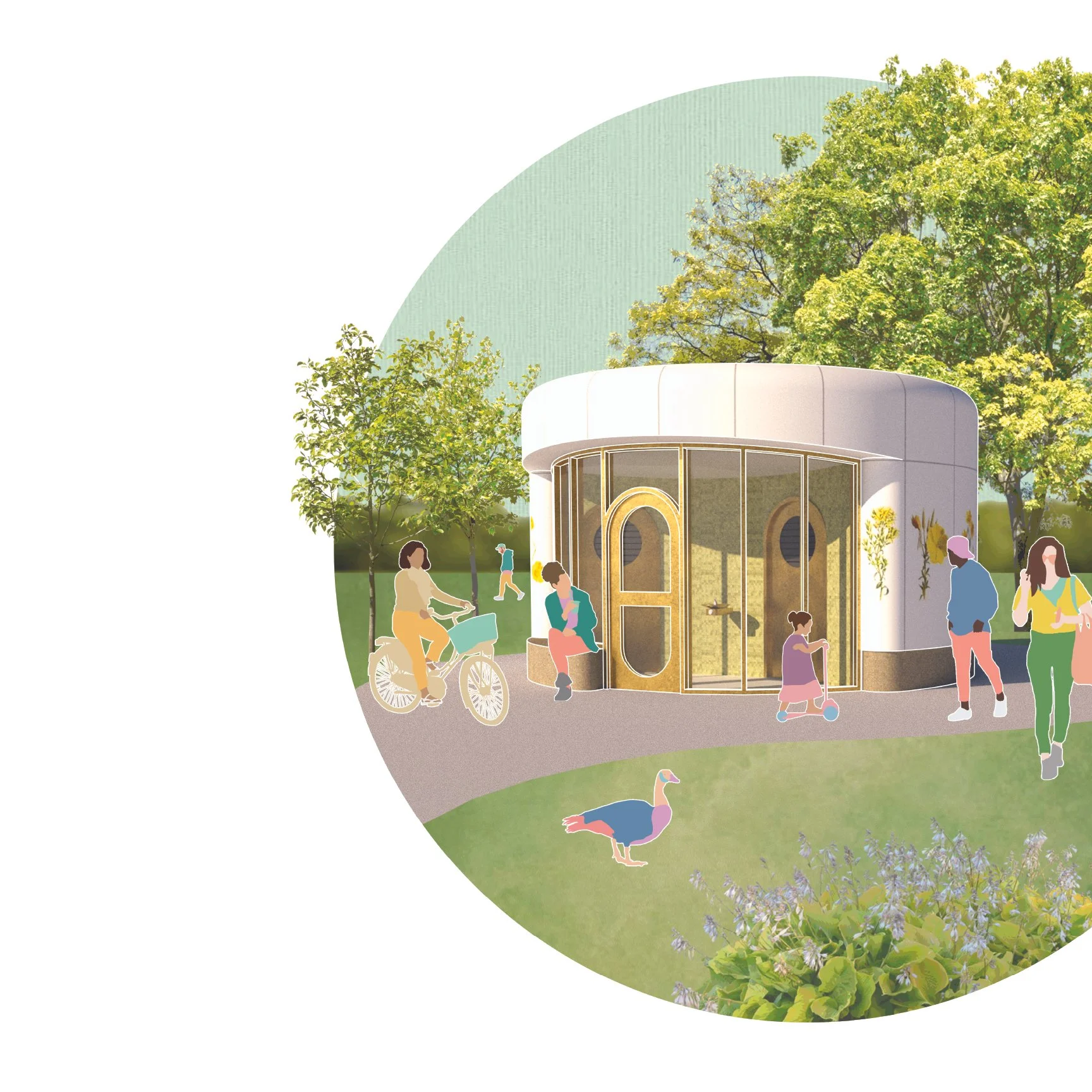
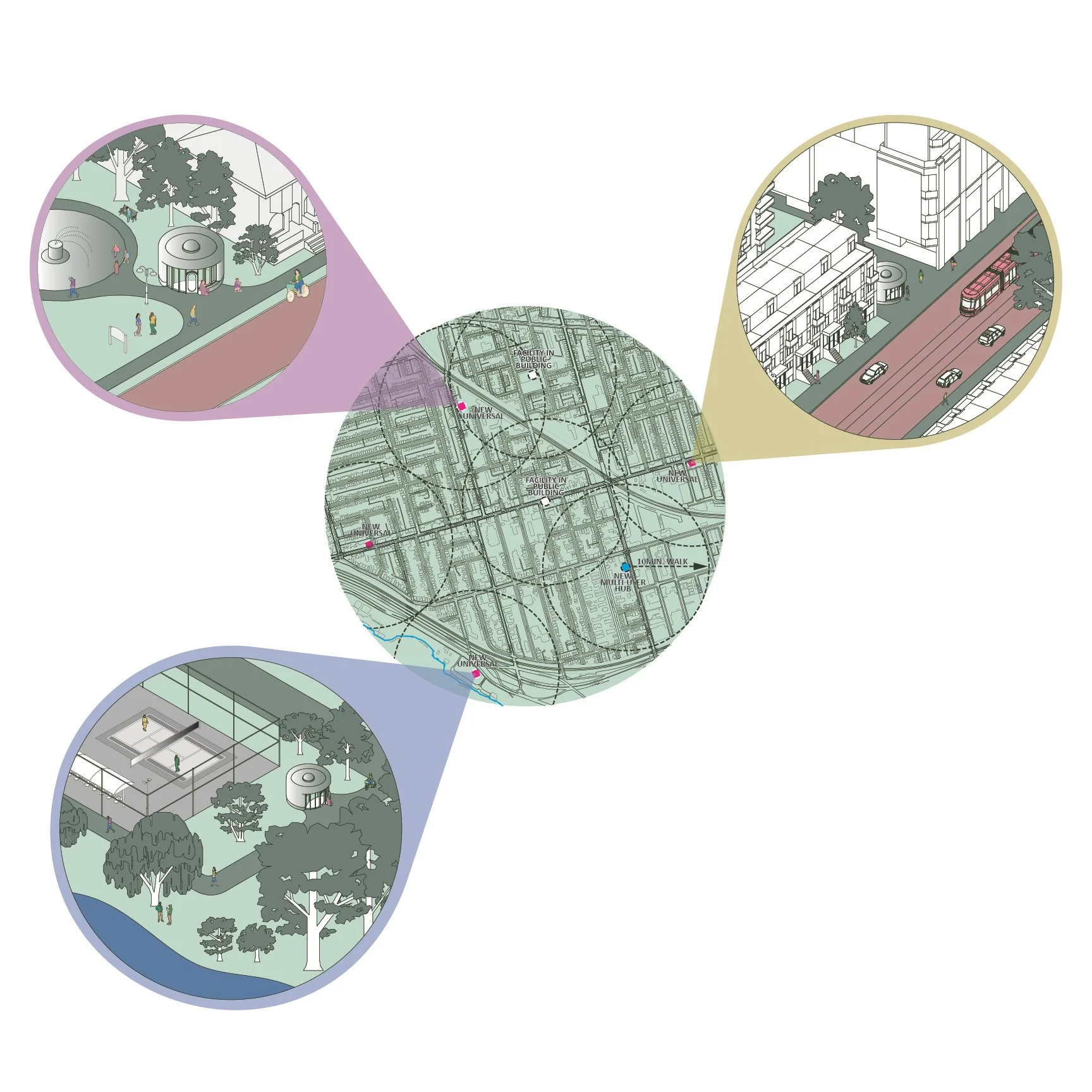
The curved structures, clad in white enameled steel panels, take inspiration in part from the fluid-dynamic forms of sanitary fixtures. This formal language contributes to the building’s legibility—making it immediately recognizable amid the urban cacophony.
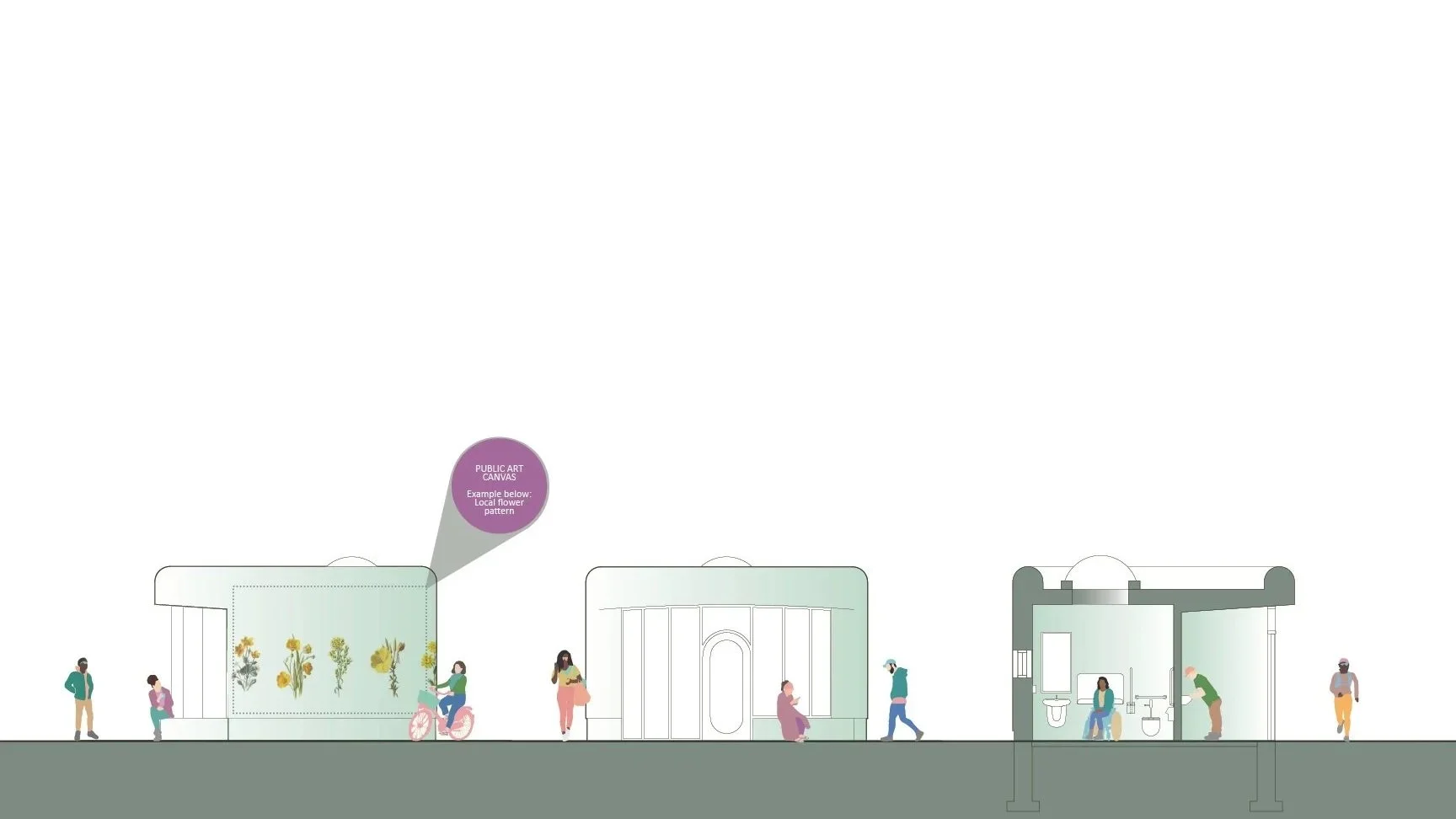
While the architecture aspires to a universal clarity, each installation also offers a site-specific dimension: the cladding panels are printed with unique ornamental imagery that reflects the particular histories and cultural context of their locations. In this way, the building speaks—both through form and surface—of place, function, and memory.
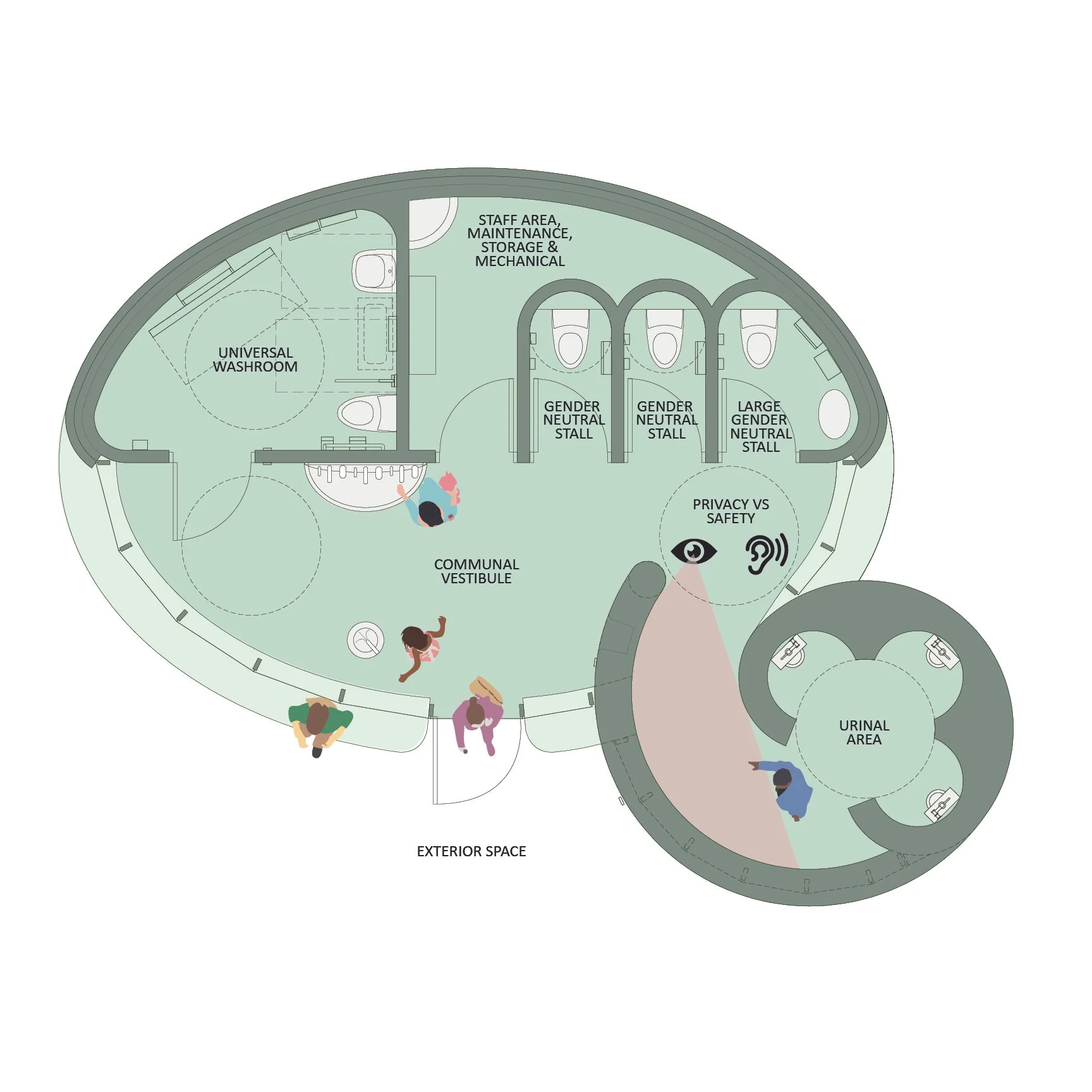
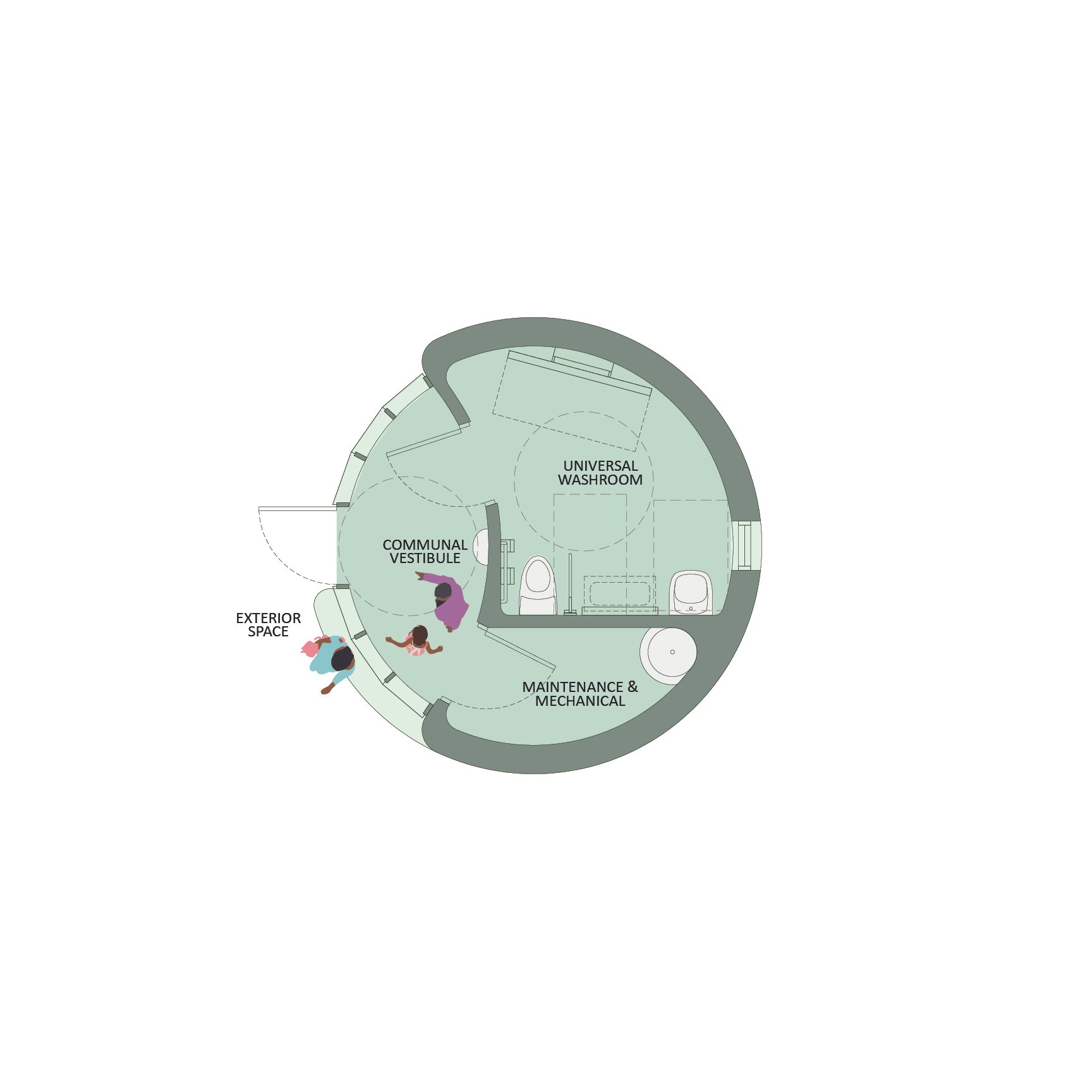
Both the multi-user and single-user washrooms prioritize public safety through thoughtful spatial design. Instead of direct access to individual stalls from the exterior, each facility incorporates floor-to-ceiling glazed vestibules. These transitional spaces allow for clear visibility, supporting safe and passive surveillance for all users. Louvered stall doors maintain audible transparency, enhancing a sense of security within the facility. Designed for year-round use, the vestibules also serve as effective weather-locks, improving thermal performance and user comfort.
More than places of necessity, the facilities are conceived as small civic landmarks—dignified and welcoming public spaces embedded in the urban fabric. Benches, change tables, water bottle filling stations, and integrated public amenities extend their role beyond hygiene, encouraging pause, gathering, and daily ritual. Fully inclusive and gender-neutral, the design affirms accessibility and equity for all users. By shedding the stigma of utilitarian washrooms, the Porcelain Palaces assert that essential infrastructure can also be beautiful, legible, and socially generous.
Credits
Weiss Architecture & Urbanism Limited Kevin Weiss – Principal, Minette Murphy, Andrew Ard